Famille Hugel
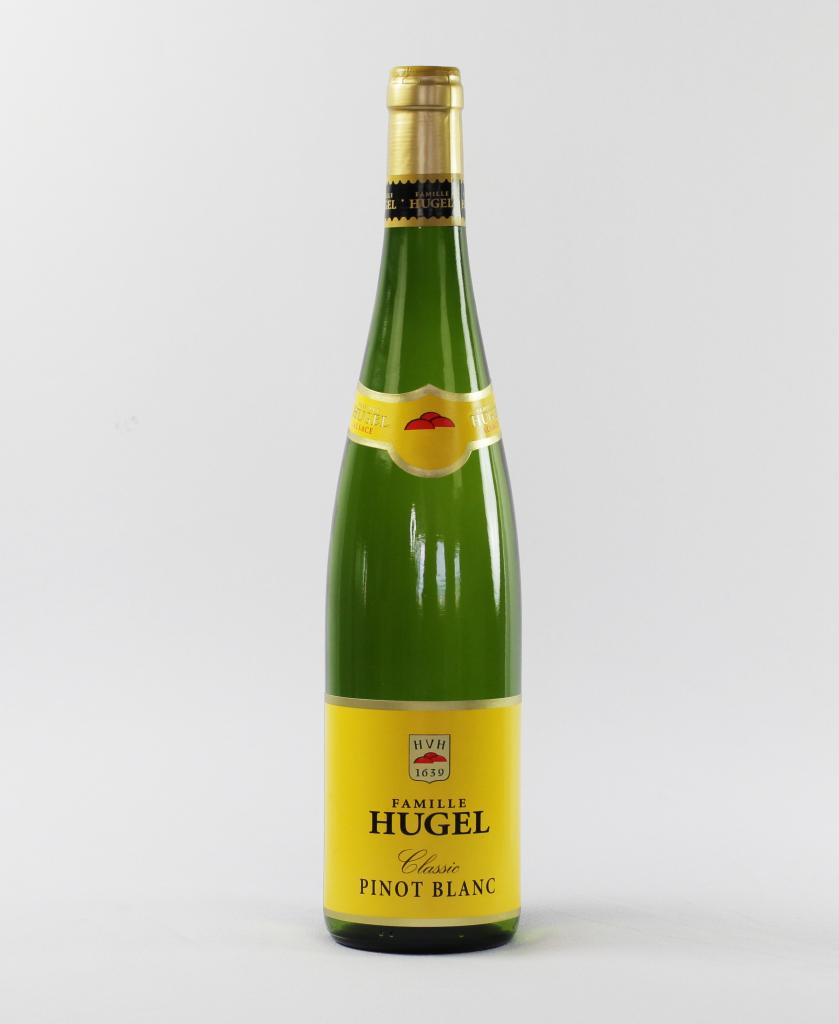
Famille Hugel Classic Pinot Blanc 2024
It is now the most planted varietal in Alsace. Delicate, subtle and well built, it makes an excellent aperitif because, although nicely rounded, it is also refreshing. The perfect all-purpose dry white wine, it goes well with country buffets, seafood and white meats.
Specifications
Alcohol content : 12 % vol.
Residual Sugar : 0.6 g/l
Tartaric acidity : 5.46 g/l
pH : 3.27
Age of vines : 35 years old
Yield : 55 hL/ha
Ingredients & nutrition ›
Presentation
Quick View
It is the most approachable wine of Alsace and also the most consistent year in year out. Not far in style from an unoaked Chardonnay such as a Macon or Chablis.
The vintage
The winter of 2024 was among the mildest—and above all, the wettest—of the past decade, with only a few nights of frost in early December.
By the end of winter, groundwater reserves in Alsace had reached 150% of normal levels, providing sufficient moisture to sustain the vineyards through the summer months. Budbreak occurred during the first week of April, with vines reaching the 3-leaf stage by April 10th. This exceptionally mild start to the season gave way after April 15th to cold and overcast conditions, with temperatures dropping 5°C below seasonal averages—nighttime lows around 5°C and daytime highs barely reaching 10°C.
From spring through mid-July, persistently cool temperatures combined with record rainfall placed the vines under considerable stress. The 2024 harvest owes its very existence in large part to the extraordinary efforts of our vineyard teams, who worked tirelessly to navigate a season that began under unfavorable conditions.
Relief came with the arrival of summer, and a warm, sunny August helped accelerate ripening and made up for much of the developmental delay. Hugel officially began harvesting on September 23rd.
By the end of winter, groundwater reserves in Alsace had reached 150% of normal levels, providing sufficient moisture to sustain the vineyards through the summer months. Budbreak occurred during the first week of April, with vines reaching the 3-leaf stage by April 10th. This exceptionally mild start to the season gave way after April 15th to cold and overcast conditions, with temperatures dropping 5°C below seasonal averages—nighttime lows around 5°C and daytime highs barely reaching 10°C.
From spring through mid-July, persistently cool temperatures combined with record rainfall placed the vines under considerable stress. The 2024 harvest owes its very existence in large part to the extraordinary efforts of our vineyard teams, who worked tirelessly to navigate a season that began under unfavorable conditions.
Relief came with the arrival of summer, and a warm, sunny August helped accelerate ripening and made up for much of the developmental delay. Hugel officially began harvesting on September 23rd.
In the vineyard
Harvested in the first days of harvest, exclusively by hand, from clay and limestone vineyards in a dozen of the most favoured localities in and around Riquewihr.
Winemaking
The grapes are taken in small tubs to the presses, which are filled by gravity, without any pumping or other mechanical intervention. After pressing, the must is decanted for a few hours, then fermented in temperature-controlled barrels vats (at 18 to 24°C). The wine is racked just once, before natural clarification during the course of the winter. The following spring, the wine is lightly filtered just before bottling, and the bottles are then aged in our cellars until released for sale. The whole production of this wine is closed with DIAM the cork without the risk of cork taint.
Varietals
Pinot auxerrois : 50%
Pinot blanc : 50%
Pinot blanc : 50%
Specifications
Alcohol content : : 12 % vol.
Residual Sugar : : 0.6 g/l
Tartaric acidity : : 5.46 g/l
pH : : 3.27
Age of vines : : 35 years old
Yield : : 55 hL/ha
: Ingredients & nutrition ›
Advice
Tasting
The wine welcomes us with a light and bright robe. The nose, discrete, subtle and racy opens up on delicate floral notes, without excess, without a need to shout. On the palate, it is freshness that dominates, green apple and yellow plum, fresh hay bring up generosity and a lingering salivating structure invites for a bite.