Famille Hugel
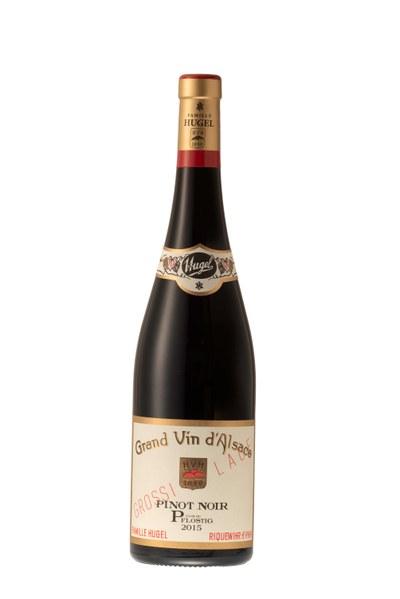
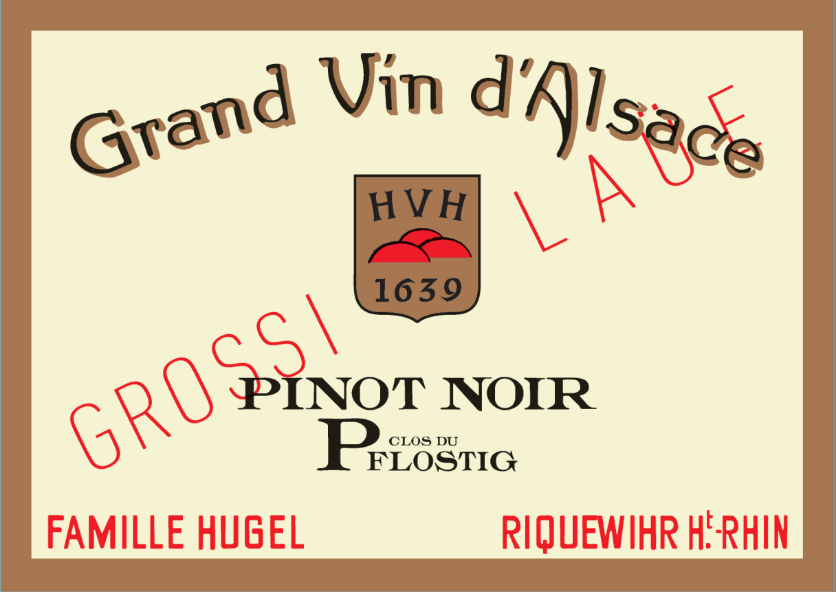
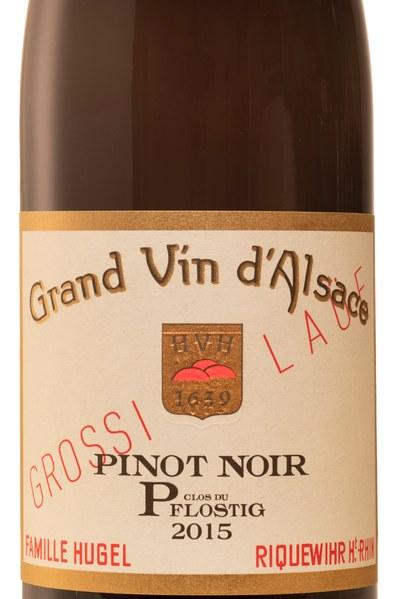
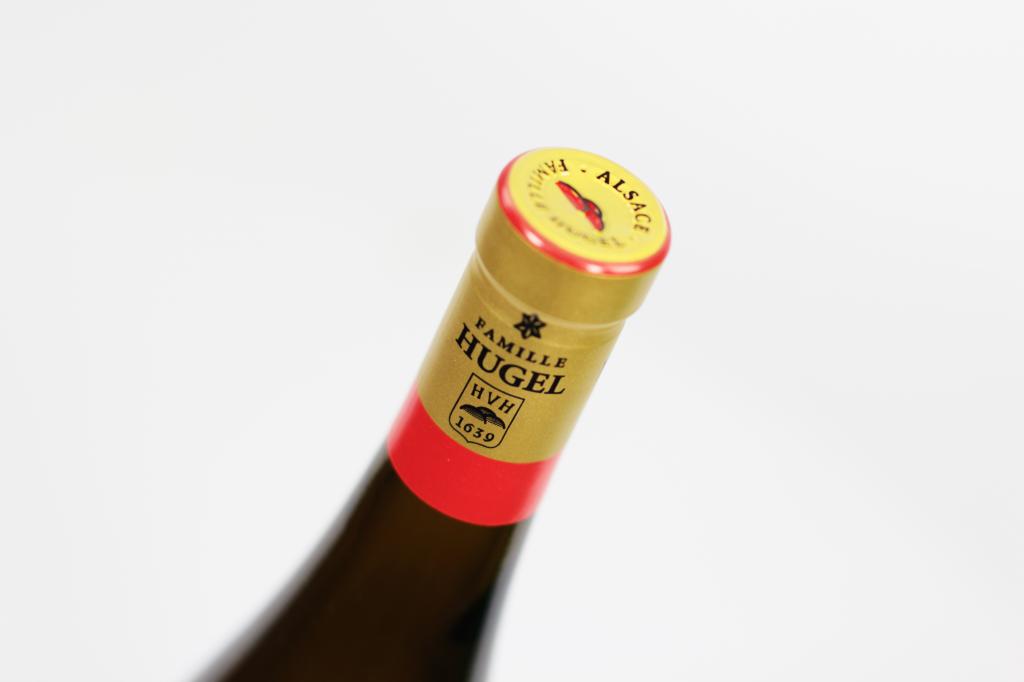
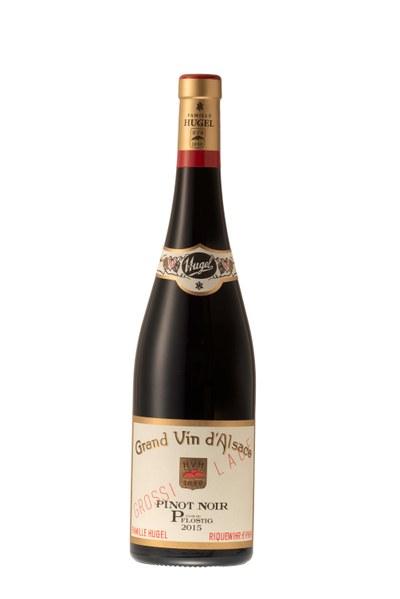
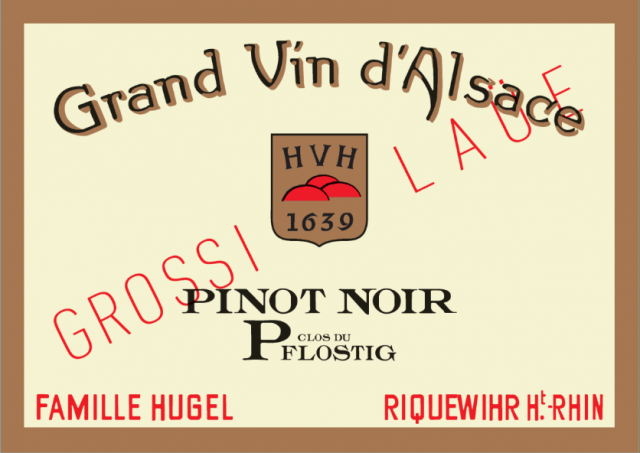
Famille Hugel, Grossi Laüe, Clos du Pflostig, AOC Alsace, Rouge, 2015
Grossi Laüe signifies the finest vineyards in Alsace dialect and represents an equivalent to the German Grosses Gewächs or the Burgundian Grand Cru.
A Pinot Noir with real minerality, profound and deep which year after year comes closer to that of a Côte d'Or ! A truly profound and complex red wine, aged 8 to 10 months in partially renewed oak barriques.
A Pinot Noir with real minerality, profound and deep which year after year comes closer to that of a Côte d'Or ! A truly profound and complex red wine, aged 8 to 10 months in partially renewed oak barriques.
Specifications
Alcohol content : 13.7 % vol.
Residual Sugar : 0.3 g/l
Tartaric acidity : 4.82 g/l
pH : 3.66
Age of vines : 33 years old
Yield : 36 hL/ha
Presentation
Quick View
The only red wine in the Grossi Laüe range, this confidential Pinot Noir comes from a family-owned clos of less than one hectare, now held in monopoly.
Born on a calcareous terroir at the foot of the Vosges, it combines finesse and precision with a more defined structure than its Burgundian cousins.
A rare and sincere Pinot Noir, marked by balance, depth and the discreet character of a vineyard known almost exclusively to the family.
Born on a calcareous terroir at the foot of the Vosges, it combines finesse and precision with a more defined structure than its Burgundian cousins.
A rare and sincere Pinot Noir, marked by balance, depth and the discreet character of a vineyard known almost exclusively to the family.
The vintage
2015 will go down as an exceptional vintage year for the whole of France. After one of the hottest and driest summers since 2003 and a harvest quality to rivals those of the great "solar" vintages of 1945, 1976, 1989 and 2009, the Alsace region will be no exception.
The year started with quite normal weather conditions, a total of 6 days below freezing (up to -6°C) during the winter. The spring was, however, pleasant and sunny. The vines budded slightly later than usual, around the 13 April, and blossomed during the first weeks of June, indicating an early vintage. This was normal considering the low rain fall, a record of only 30mm between 4 May and 24 July! These dry conditions were compounded by a heatwave that lasted for almost the whole of July.
By the time the grapes started to ripen, the vines were suffering, especially in the more well-drained soils with limited reserves of water. Riquewihr and its loamy soil seemed to have escaped the worst of this and the heavy rain that came in mid-August saved the harvest just in time.
We started grape-picking on the 10 September, three days later than the rest of the Alsace, and the first grapes to arrive in the winery gave every indication of an exceptional vintage year. The grapes were perfectly healthy and ripe; their supple acidity was a taste of great wine to come. The Pinots, especially the magnificent Pinot Noir, of this great "solar" year were highly appreciated.
Only one day of rain disrupted the harvest, which was already well underway at the time.
The rapid acceleration of the ripening during the third week and a nice outbreak of botrytis meant the most part of our Riesling de Schoenenbourg were harvested late, and once again the Engelkritt (Angels' Vine) won us not one but two of the "Sélection de Grains Nobles" awards for this grape variety, the most concentrated being at a potential of 23°!
The year started with quite normal weather conditions, a total of 6 days below freezing (up to -6°C) during the winter. The spring was, however, pleasant and sunny. The vines budded slightly later than usual, around the 13 April, and blossomed during the first weeks of June, indicating an early vintage. This was normal considering the low rain fall, a record of only 30mm between 4 May and 24 July! These dry conditions were compounded by a heatwave that lasted for almost the whole of July.
By the time the grapes started to ripen, the vines were suffering, especially in the more well-drained soils with limited reserves of water. Riquewihr and its loamy soil seemed to have escaped the worst of this and the heavy rain that came in mid-August saved the harvest just in time.
We started grape-picking on the 10 September, three days later than the rest of the Alsace, and the first grapes to arrive in the winery gave every indication of an exceptional vintage year. The grapes were perfectly healthy and ripe; their supple acidity was a taste of great wine to come. The Pinots, especially the magnificent Pinot Noir, of this great "solar" year were highly appreciated.
Only one day of rain disrupted the harvest, which was already well underway at the time.
The rapid acceleration of the ripening during the third week and a nice outbreak of botrytis meant the most part of our Riesling de Schoenenbourg were harvested late, and once again the Engelkritt (Angels' Vine) won us not one but two of the "Sélection de Grains Nobles" awards for this grape variety, the most concentrated being at a potential of 23°!
In the vineyard
Sourced from the Clos du Pflostig, on the east-facing slopes of Riquewihr, this Pinot Noir comes from a Muschelkalk limestone terroir composed of dense, fissured lithographic limestones.
The shallow but well-drained soils allow the vines to root deeply into the bedrock.
Situated directly on the Vosges foothills, the clos enjoys a tempered microclimate, where slow and even ripening produces wines with fine structure, natural freshness and balanced acidity.
The vines, averaging 30 years of age and planted in the 1990s, come from old massal selections of Pinot Noir, chosen for the finesse of their grain and their perfect adaptation to this calcareous terroir.
They have been cultivated without herbicides or insecticides for over twenty years.
Every other row is grassed over to promote biodiversity and limit erosion, while the soils are mechanically hoed and ploughed.
No mineral nitrogen fertilizers are used; organic composts of animal origin are applied occasionally to maintain biological vitality.
Biocontrol treatments and natural preparations have replaced synthetic products, following an approach based on observation and precision.
Since 2024, the estate’s red wines have been certified organic, marking the culmination of a long-standing commitment to respectful and patient viticulture.
The shallow but well-drained soils allow the vines to root deeply into the bedrock.
Situated directly on the Vosges foothills, the clos enjoys a tempered microclimate, where slow and even ripening produces wines with fine structure, natural freshness and balanced acidity.
The vines, averaging 30 years of age and planted in the 1990s, come from old massal selections of Pinot Noir, chosen for the finesse of their grain and their perfect adaptation to this calcareous terroir.
They have been cultivated without herbicides or insecticides for over twenty years.
Every other row is grassed over to promote biodiversity and limit erosion, while the soils are mechanically hoed and ploughed.
No mineral nitrogen fertilizers are used; organic composts of animal origin are applied occasionally to maintain biological vitality.
Biocontrol treatments and natural preparations have replaced synthetic products, following an approach based on observation and precision.
Since 2024, the estate’s red wines have been certified organic, marking the culmination of a long-standing commitment to respectful and patient viticulture.
Winemaking
The grapes from the Clos du Pflostig are hand-harvested and carefully sorted in the vineyard to retain only the healthiest and ripest bunches.
They are destemmed, then placed in tanks with the utmost care to preserve the integrity of the berries.
Maceration lasts around two weeks, with gentle manual punch-downs to extract colour, texture and structure without excess.
Fermentation takes place at moderate temperature to preserve the purity of fruit and the finesse of the tannins.
The wines are then matured in Burgundy barrels for around six months, with a limited proportion of new oak to avoid marking the wine.
Each barrel is tasted individually before blending, and only the most balanced and expressive lots are selected for the Grossi Laüe.
After bottling, the wine undergoes additional ageing in the cellars, refining its texture and revealing greater depth and complexity before release.
They are destemmed, then placed in tanks with the utmost care to preserve the integrity of the berries.
Maceration lasts around two weeks, with gentle manual punch-downs to extract colour, texture and structure without excess.
Fermentation takes place at moderate temperature to preserve the purity of fruit and the finesse of the tannins.
The wines are then matured in Burgundy barrels for around six months, with a limited proportion of new oak to avoid marking the wine.
Each barrel is tasted individually before blending, and only the most balanced and expressive lots are selected for the Grossi Laüe.
After bottling, the wine undergoes additional ageing in the cellars, refining its texture and revealing greater depth and complexity before release.
Presentation
Brochure introducing the Grossi Laüe range
Video: Geology and terroirs of Riquewihr
Video: Geology and terroirs of Riquewihr
Varietal
Pinot Noir : 100%
Specifications
Alcohol content : : 13.7 % vol.
Residual Sugar : : 0.3 g/l
Tartaric acidity : : 4.82 g/l
pH : : 3.66
Age of vines : : 33 years old
Yield : : 36 hL/ha
Advice
Tasting
The bright, light ruby colour immediately suggests a delicate and refined wine.
The nose opens with fresh red fruits, morello cherry and dried rose, followed by more earthy, root-like nuances of wild carrot and celery — hallmarks of the Pflostig.
A subtle touch of barrel ageing, with animal, buttery and lightly spicy notes, frames the wine without dominating it.
After nearly ten years, the oak has melted seamlessly, allowing the terroir itself to take centre stage.
On the palate, the attack is vivid and precise, carried by a gentle freshness and present yet supple tannins.
In the pure Alsace style, the mouthfeel is tense and digestible, leading to a long, saline and chalky finish of great finesse and balance.
This Pinot Noir pairs perfectly with grilled red meat dishes, roasted poultry, saucy dishes, or aged cheeses.
The nose opens with fresh red fruits, morello cherry and dried rose, followed by more earthy, root-like nuances of wild carrot and celery — hallmarks of the Pflostig.
A subtle touch of barrel ageing, with animal, buttery and lightly spicy notes, frames the wine without dominating it.
After nearly ten years, the oak has melted seamlessly, allowing the terroir itself to take centre stage.
On the palate, the attack is vivid and precise, carried by a gentle freshness and present yet supple tannins.
In the pure Alsace style, the mouthfeel is tense and digestible, leading to a long, saline and chalky finish of great finesse and balance.
This Pinot Noir pairs perfectly with grilled red meat dishes, roasted poultry, saucy dishes, or aged cheeses.